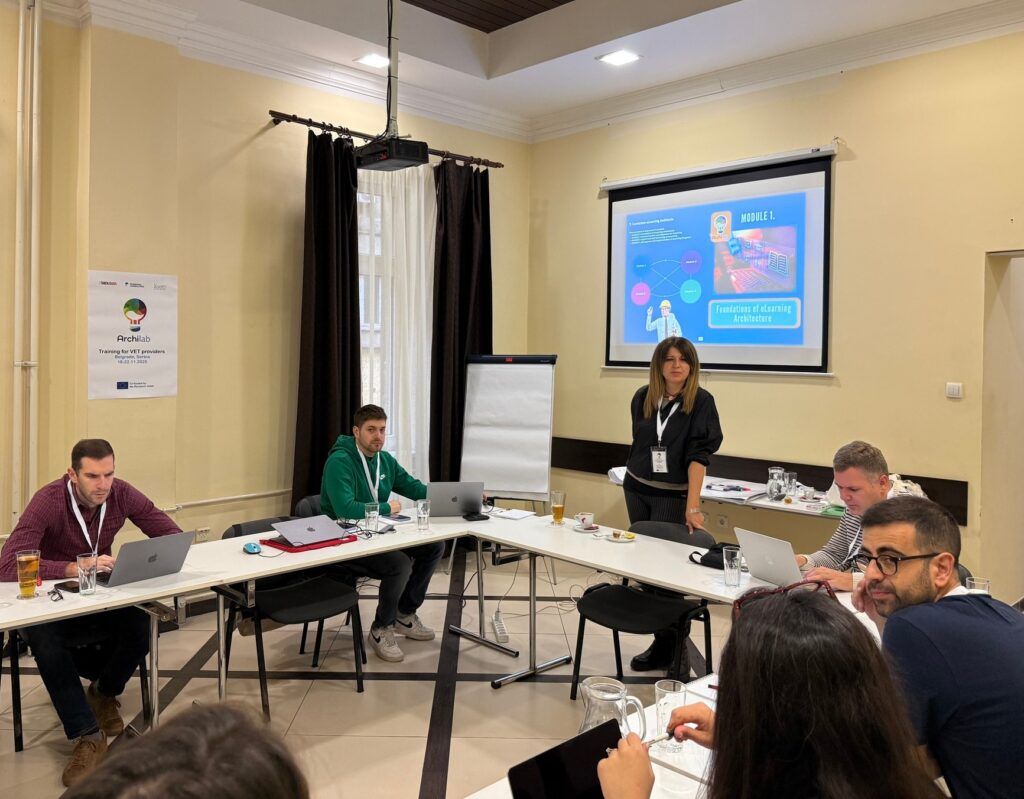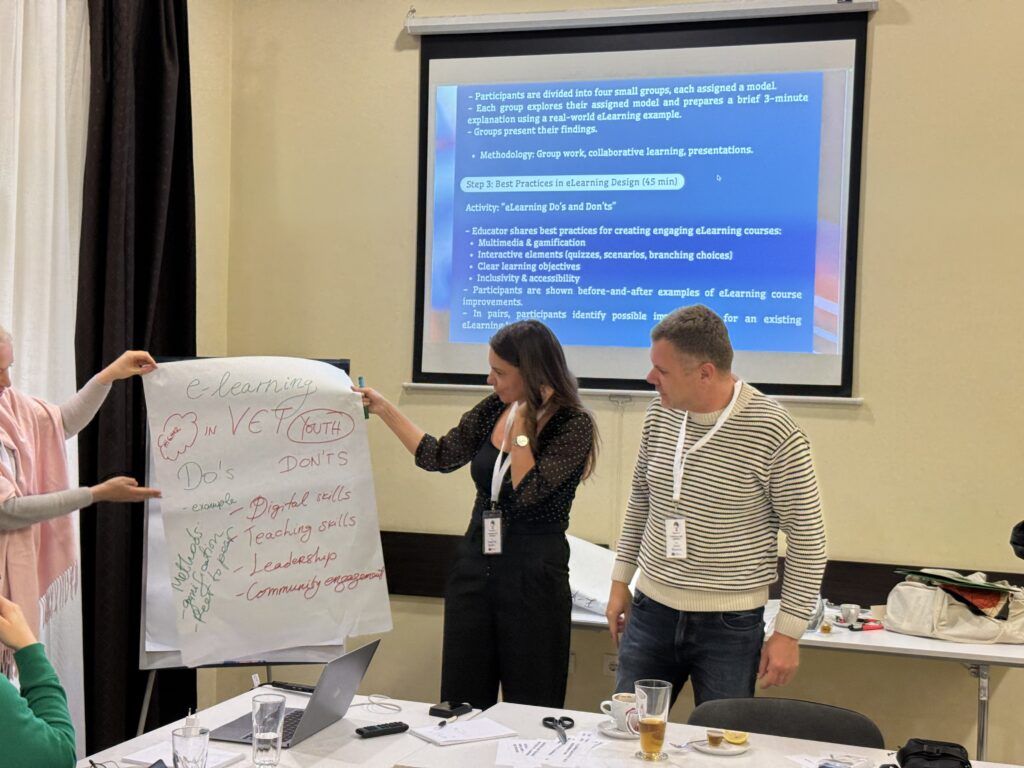
From 18 to 22 November 2025, ARCHILAB delivered a five-day training in Belgrade, Serbia, for nine VET educators from Spain, Croatia, and Serbia. The programme aimed to strengthen participants’ competences as eLearning architects, meaning educators able to design, deliver, and evaluate high-quality digital VET that is learner-centred, inclusive, and aligned with EU quality standards. The week followed a clear learning flow that moved from building group connection and shared expectations, through exploration of pedagogical and legal frameworks and digital tools, to the creation of concrete eLearning solutions, adaptive learning pathways, and individual action plans.
The training relied on non-formal education methodology throughout. Sessions were structured around the experiential learning cycle, ensuring every activity included reflection and transfer to participants’ own professional realities. Facilitators kept the process learner-centred by continuously checking needs and adapting the rhythm accordingly, while most work happened in pairs or small groups through simulations, case studies, role plays, project tasks, and peer feedback. Diversity and inclusion were actively supported in the methods chosen, allowing different experience levels and learning styles to contribute equally. Digital tools were not only presented but used as learning spaces, so participants experienced good online practice directly. Daily check-ins and a final evaluation created a steady feedback loop. Instead of lecturing, facilitators guided the process and helped participants connect content to their institutional contexts.
Across the five days, participants gradually built confidence and practical skill. Early sessions established trust and clarified expectations, then introduced the eLearning architect profile and its links to frameworks like EQAVET and DigCompEdu. Participants explored how NFE principles can translate into digital VET, examined EU legal responsibilities such as GDPR and copyright, and analysed successful eLearning case studies to identify quality indicators. Mid-week work focused on trying out digital tools and using them to build interactive micro-modules and collaborative lessons shaped by multimedia learning and user-experience principles. The later sessions addressed adaptive learning, inclusive digital pedagogy, and sustainability, ending with participants revising their own materials and committing to specific improvements. The programme closed with individual action plans for the next months and the creation of a small cross-border network for continued cooperation, followed by EQAVET-aligned certification.
The training met its goals by combining strong methodology, hands-on digital design practice, and continuous reflection in a supportive small group setting. Participants left with clearer professional roles as eLearning architects, practical experience in selecting and applying tools, enhanced ability to design engaging and inclusive digital VET offers, and concrete plans to implement changes at home.