
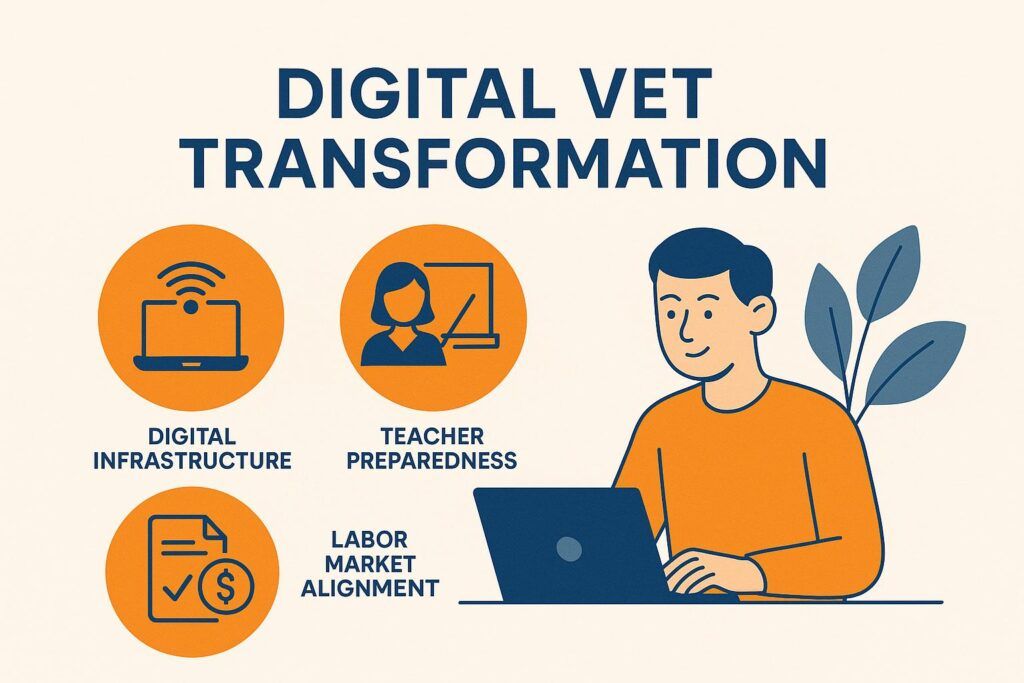
At the heart of ARCHILAB lies a comprehensive transnational research effort that analyses the state of digital VET transformation in Spain, Croatia, and Serbia. By examining how national systems are adapting to include technologies like artificial intelligence, virtual and augmented reality, and modern instructional design, the project, through its research, reveals gaps, trends, and untapped opportunities across borders.
It also sheds light on critical factors such as:
- Regional disparities in digital infrastructure and access
- Teacher preparedness for digital education
- The alignment (or misalignment) of current training with labor market needs
In a rapidly evolving digital landscape, VET systems across Europe are under pressure to adapt—not only to bridge persistent youth unemployment but also to meet growing demand in the ICT sector. A recent comparative analysis of Croatia, Spain, and Serbia reveals a shared momentum toward reform, though each country charts a distinct path through the transformation process.
Among the three, Spain stands out as a leader in VET modernisation. Strategic investments—such as the expansive Aulas ATECA smart classroom initiative—have elevated tech integration and curriculum diversification. The country also reports high employer demand for VET graduates, suggesting an improving match between training and labour market expectations.
Yet Spain’s challenges are far from over. Youth unemployment remains one of the highest in Europe, and gaps persist in teacher training, digital pedagogy, and the availability of dedicated programs for roles like e-learning designers. Without addressing these areas, the digital potential of Spain’s VET system remains only partially realised.
While Croatia and Serbia operate on smaller scales, they share many of Spain’s structural challenges—especially in keeping curricula aligned with technological advancement. Despite infrastructure investments, both countries report skill mismatches in critical fields such as AI, cybersecurity, and e-learning content creation.
Youth joblessness also continues to exceed EU averages, underscoring the urgency of reform. Limited digital content in existing VET offerings and underdeveloped teaching capacities pose barriers to effective digital learning. However, both countries are engaging with innovation, exploring modular learning approaches and micro-credentials to better reflect real-world skill needs.
A Shared Vision for the Future of VET
Despite their differences, all three countries recognise that future-ready VET systems must be:
- Digitally rich, embedding emerging tech skills into every level of instruction
- Flexible and modular, supporting lifelong learning and specialization
- Inclusive, extending opportunities to underserved regions and under-represented groups
There is growing momentum behind the development of new training pathways for e-learning developers, digital transformation specialists, and other next-generation ICT professionals. These innovations aim not only to bridge current skill gaps but also to insulate future workforces from digital disruption.
The road ahead for VET in Croatia, Spain, and Serbia is one of shared purpose and strategic urgency. With deliberate investments in curriculum innovation, teacher upskilling, and public-private collaboration, VET can evolve from a traditional alternative to higher education into a dynamic engine for sustainable, inclusive economic growth.
By embracing this transformation, these countries are laying the groundwork for more resilient labour markets and ensuring their young people are equipped not just for jobs of today but for the demands of the digital future.